Franchise Ownership · September 2026
Inside Foundations: What SCI Teaches Its Newest Goddard Owners
A look inside SCI's Foundations training for new Goddard School owners — what gets taught in the first three years, and why support doesn't stop at opening day.
Speranza Consulting and Investments · 5 min read

Most training days end when the certificate does. Foundations is built to do the opposite.
Speranza Consulting and Investments brings its newest Goddard School owners into one room for a full day that has nothing to do with opening a school and everything to do with running one. The most recent session ran eight hours, start to finish, at Treesdale Country Club outside Pittsburgh. Fifteen agenda items. No break longer than the time it takes to reset a coffee station.
Where Owners Do the Work
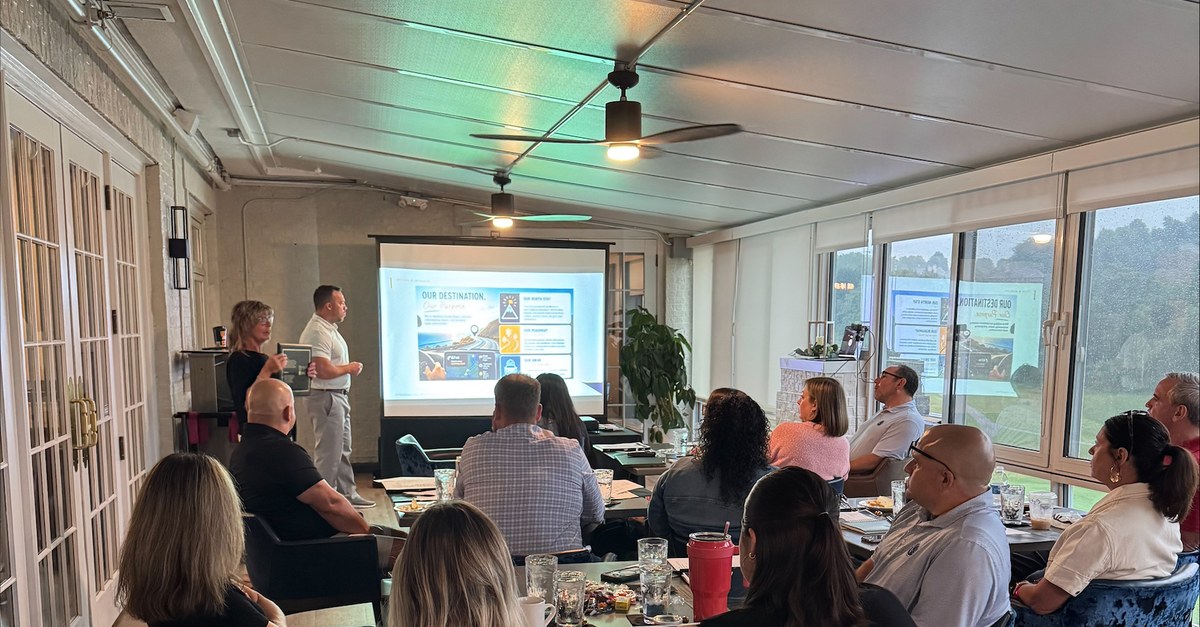
The day opens with a message, not a lecture: Our Destination. Our Purpose. A North Star that doesn't move, a Roadmap for getting there, and a Summit that marks real progress along the way — every owner in the room is asked to place their own school somewhere on that map before the day is out.
That's the tone for the whole day. Nobody in the room needs to be told what a Goddard School is. They already run one, or they're about to. What they're there for is everything that happens after the ribbon-cutting — the part that doesn't show up in a franchise disclosure document.
Matt and Dina Speranza open it themselves, alongside the rest of SCI's leadership — operations, finance, construction — and two Goddard School owners who join not as outside speakers, but as peers a few years further down the same road.
What New Owners Actually Learn
The agenda runs from safety to sales to what a healthy school's numbers should look like — but the shape of it says more than any single item.
Safety comes first, and it's treated as a system, not a checklist. The training breaks it into more than a dozen distinct categories — physical safety, emotional safety, the safety that comes from a predictable routine, the safety of feeling like you belong. The point being made is a simple one: "we keep kids safe" is not one decision made once. It's a dozen small decisions made every day, and new owners need to see all of them named before they can start making them well.
Every child is unique, and that's treated as an operating instruction, not a slogan. Owners work through real scenarios — the kind of thing that actually happens in a classroom on a Tuesday — and talk through what it looks like to notice a child's needs before they become a problem.
Families get a standard, not a vibe. The training teaches a five-step rule for how every family should be greeted, from the first hello to the goodbye at pickup: greet them, use their name, understand what they actually need, smile before you speak, and send them off feeling like the visit mattered. It's simple on purpose. The first ten seconds of a family's visit to a school decide more than any tour script could.
Faculty gets held to the same bar as leadership. New owners are told directly: administration should model the standard it expects from teachers, not just publish it. Gossip gets named as a real, recurring problem — and owners are coached to address it directly rather than let it become "just how the school is."
The business side isn't hidden from new owners — it's handed to them plainly. Occupancy, staffing costs relative to tuition, and family satisfaction are framed as the three numbers that tell you whether a school is actually healthy, alongside the accreditation and compliance work that keeps a school in good standing with Goddard's own system. Nobody walks out of Foundations without understanding that running a great school and running a sound business are the same job, not two competing ones.
The Words Every Owner Takes Home
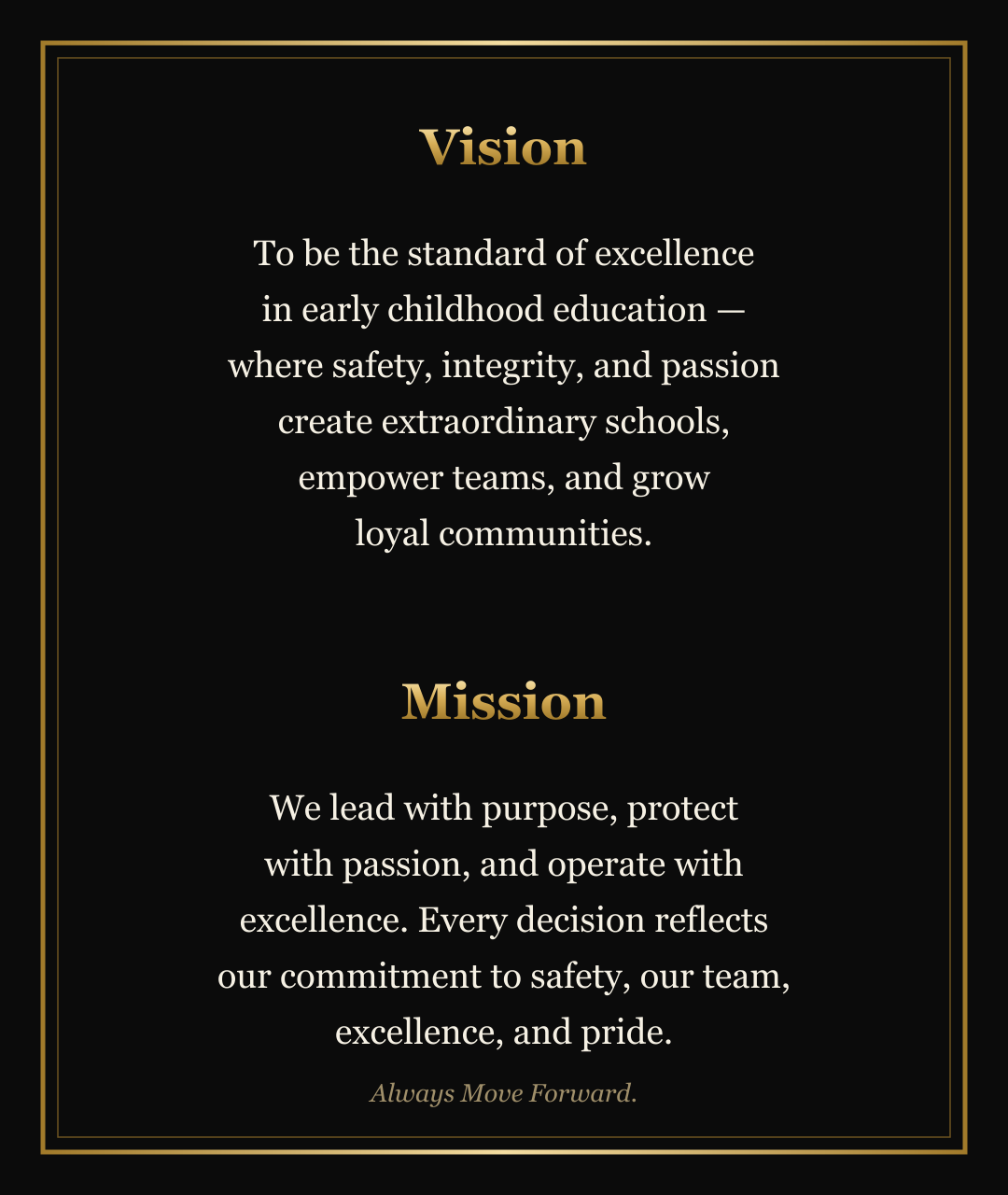
Every owner in the room sees the company's Vision and Mission stated in full, word for word. It's not a wall decoration. It's the standard every other part of the day gets measured against.
The part that happens after hours
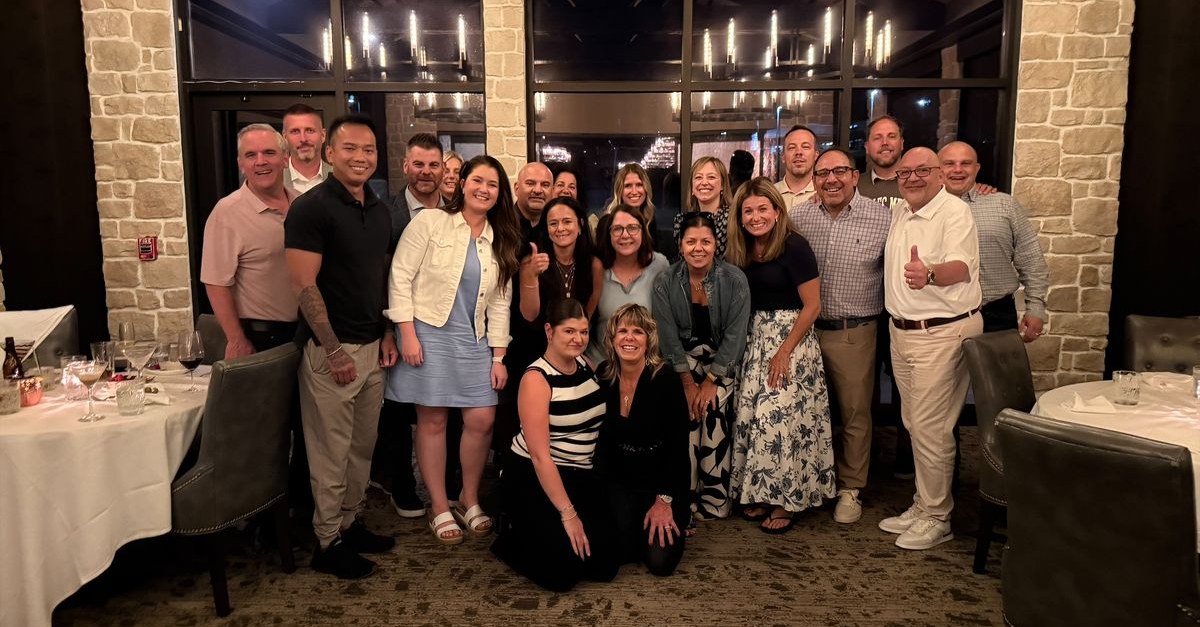
Ask anyone who's been through Foundations what they remember most, and it's rarely the agenda. It's dinner, later that evening — the same group of first-three-year owners, off the clock, comparing notes on what's actually hard about the job nobody warned them about.
That's not a coincidence. An owner who calls another owner on a bad Tuesday isn't following a company policy. They're doing what the room was built to make possible.
Support doesn't have an expiration date
Speranza's whole model rests on being an on-site owner — someone in the building every day, not a name on a lease. Foundations is the part of that model that's easy to miss from the outside: the training doesn't stop the day a school opens. It continues, deliberately, for the owners still in their first three years — the stretch where the job changes the most and the manual helps the least.
If you're evaluating what it actually looks like to open and run a Goddard School with a partner who stays involved past day one, schedule a free consultation — or ask us for the Franchisee Success Kit.
Always Move Forward.
This article is educational and makes no representation of financial performance or guaranteed results. It is not an offer to sell a franchise. Requirements and support obligations vary by brand — confirm specifics against the current Franchise Disclosure Document.
Ready to explore your options?
SCI guides every partner through financing, site selection, and operations from day one.
Free Consultation